800-454-9103


Twenty Years of Ferocious Media: A Founder Q&A on Staying Relevant, Efficient, and Accountable
For most companies, lasting twenty years in digital marketing would be remarkable. For Ferocious Media, it represents something far harder: sustained relevance in an industry defined by constant disruption. Platforms change. Algorithms evolve. Trends rise and collapse. Yet over two decades, Ferocious Media has stayed grounded in the same core principles that shaped its earliest days: efficiency over excess, transparency over smoke and mirrors, and results that actually matter to the businesses being served.
This kind of longevity does not happen by accident. It comes from paying attention when others get comfortable, adapting early instead of reacting late, and making decisions that prioritize long-term stability over short-term growth.
In this blog, we share the twenty-year journey of Ferocious Media through a Q&A with founder Kevin Szypula, covering the pivotal moments, hard lessons, and strategic shifts that transformed a small local PPC experiment into a specialized growth partner for home service businesses across the United States.
About the Beginning
What inspired you to start Ferocious Media?
Before Ferocious Media existed, I spent about a decade in the Yellow Pages industry. For nearly a hundred years, that was the default for local advertising. Buying a print ad was not a marketing decision; it was just the cost of doing business.
Around 2004, I saw the tide turning. Consumer behavior was shifting, and search engines were quietly reshaping how people found local services. I was leading a small team in New York City that was tasked with testing an unproven concept: selling local Google and Yahoo ads and pairing them with call tracking to prove performance.
The results were immediate. Phones rang. Leads could be measured. Business owners could finally see a direct connection between their advertising dollars and the customers they were attracting. But the legacy Yellow Pages company I was with struggled to respond. Print advertising carried extremely high margins, and PPC sent most of the budget directly to Google. Large organizations tried to “scale” digital marketing with rigid, cookie-cutter campaigns that removed customization and optimization.
At the same time, I was building relationships with early Google contacts and learning how to run local PPC effectively. I saw independent digital agencies succeed by focusing on results rather than volume, and it became clear that the future of local advertising would not be built by companies clinging to old models.
Launching Driven Local With a Different Philosophy
Why did you leave the Yellow Pages world to start your own agency?
By 2006, staying inside the Yellow Pages ecosystem meant committing to a model already in decline. Leaving meant walking away from stability and betting on an industry that was still defining itself.
People ask if that decision was scary, but to me, the equation was simple. The Yellow Pages was a declining monopoly that business owners largely disliked. Google was the most respected company in the U.S. at the time. I knew that if we could offer a cutting-edge service at a fair management fee and run it efficiently, it was a can’t-lose proposition.
Driven Local was founded on a simple but radical premise: digital marketing could be run efficiently, transparently, and fairly. Many early agencies relied on high management fees, aggressive sales tactics, and reporting that obscured performance. We did the opposite. We kept overhead low, structured fees fairly, and treated optimization as a daily discipline.
What was the original mission when you launched?
We had to win on two fronts. First, we had to beat digital agencies charging high fees and hiding behind complicated dashboards. Second, we had to convince business owners who had used print advertising for decades that PPC was not another gimmick.
We earned trust by focusing on clear reporting, call tracking, and honest conversations about what was working. Smaller budgets were positioned as a strategic advantage because they forced discipline and reduced waste. Efficiency was not a tactic. It was the foundation.
The Great Recession and the Proof of Concept
How did the 2008 recession shape your early growth?
The Great Recession forced businesses to reexamine every expense. Marketing budgets that once felt automatic were suddenly under scrutiny, and traditional advertising costs became hard to justify. For many local businesses, the Yellow Pages was one of their biggest monthly commitments, even as usage and call volume declined.
For us, the downturn became a proving ground. We showed business owners how a single expensive print ad could be replaced with a smaller PPC budget that delivered measurable results. At the time, ad auctions were far less competitive, so efficient campaigns performed extremely well on limited spend.
What stood out was not just performance, but predictability. Clients could see where their money was going and adjust campaigns in real time. That control was impossible with print advertising. The recession validated our approach and reinforced a belief that still drives Ferocious Media today: disciplined digital marketing can outperform traditional advertising, even in tough economic conditions.
The Moment That Put Ferocious Media on the Map
What was the first major milestone that changed your trajectory?
The pivotal moment came in 2009. To understand it, you have to understand the landscape back then. Google had partnered with massive sales organizations that often misrepresented fees, blended low-quality traffic into campaigns, and delivered poor results to small business owners. Churn was high, and Google realized business owners were blaming their platform, not the agencies.
My partner and I took a gamble. We spent money we didn’t really have to travel to a conference at Google’s headquarters in Mountain View, hoping to make meaningful connections. The conference itself offered little payoff, but afterward, the stars aligned during a post-event mixer.
We were speaking with our rep when a Googler named Kesh walked by. He happened to lead the overhaul of Google’s agency partner ecosystem. He asked about our service, retention, and results. When he learned we knew every client by name and focused on performance rather than volume, it stood out.
I have to emphasize how improbable that moment was. Kesh was not even attending the conference. He was walking across campus to catch a shuttle home and happened to pass by us within a few feet. If we had been standing ten feet in another direction, none of it happens.
A week later, he called. Google was launching a new partner program built on transparency, including strict requirements around budget allocation. I signed the contract within minutes and returned it immediately. We became one of the first agencies in the new Google Partner program, and that momentum eventually led to multiple global Google Partner awards.
Growth, Whales, and the Hardest Lesson Learned
What challenge taught you the most as the agency grew?
Client concentration. As our reputation grew, we began attracting large, high-profile accounts across industries like tourism, professional sports, pharmaceuticals, and online gaming. Landing those brands felt like validation, and the revenue felt like security.
Over time, the hidden cost became obvious. Supporting massive brands required dedicated staff and specialized workflows. When one of those clients left, the financial impact was immediate and severe. Losing a single account could create weeks of uncertainty and force reactive decision-making.
I eventually connected the pattern to what I recognized as the Walmart Effect. Businesses are built around a single dominant customer, and if that relationship ends, the business collapses. We had to fix that.
It took years of restructuring, difficult conversations, and patience, but it reshaped how we defined success. Stability, sustainability, and team health became as important as revenue.
Rebuilding for Stability and Zero Layoffs
How did you rebuild the company to be more resilient?
We had to rethink how growth worked. The goal was no longer to chase the largest accounts, but to build a balanced client portfolio that let us scale without putting our people at risk.
Over time, we shifted away from enterprise clients and avoided taking on too many tiny accounts that would overwhelm the team. Instead, we focused on a consistent client size aligned with our expertise and capacity. That balance reduced volatility, improved retention, and created a healthier work environment.
The most meaningful result was cultural. In twenty years, we have never had to lay off a valued employee because an account left. That commitment to long-term thinking became a defining differentiator.
Expanding Beyond PPC Without Losing Focus
How did Ferocious Media evolve beyond PPC?
We started as a PPC-focused agency because PPC delivered fast, measurable results. Over time, we realized ad performance could only be as strong as the foundation supporting it. Even the best campaigns struggled when websites were outdated, confusing, or built without conversion in mind.
So we began designing and developing websites specifically for service-based businesses. These sites were built to guide users toward action and reduce friction. As clients sought visibility beyond ads, we expanded into technical SEO, content development, and listings management.
This did not dilute focus. It strengthened it. By controlling more of the customer journey, we aligned strategy across channels and delivered more reliable outcomes. The goal was never to offer more services; it was to remove obstacles between intent and conversion.
Solving the Attribution Puzzle Over Two Decades
Which capability are you most proud of building?
Solving the attribution puzzle.
Early on, counting calls was enough because it proved ads were working. But we knew that visibility and clicks were not the full story, especially for home service businesses where sales happen offline.
We adopted keyword-level call tracking with dynamic number insertion, tying phone calls to specific searches, campaigns, and user intent. That was a major leap. But another gap remained: calls do not always equal revenue.
To close the loop, we became one of the first agencies to integrate directly with client CRM systems. By matching Google Click IDs to real sales data, we could finally see which ad spend translated into booked jobs and actual dollars.
Today, AI listens to every call, scores lead quality, identifies booked appointments, and extracts revenue values. That data is pushed back into ad platforms in real time, training bidding algorithms to optimize for profit rather than volume. This long-term commitment to attribution transformed Ferocious Media from an ad management firm into a data-driven growth partner built around accountability.
The 2020 Pivot to Home Service Specialization
What turning point most shaped the company’s direction?
In 2020, we committed to total specialization in the home service trades, including plumbing, HVAC, electrical, and roofing.
We recognized a critical truth: being good at everything limits your ability to be exceptional at anything. We had deep experience across many industries, but we had built a strong track record with home services where attribution, speed to lead, and local intent matter most.
By committing to a single vertical, every team member could master the language, seasonality, and operational realities of these businesses. Running hundreds of similar campaigns created a powerful feedback loop. Insights traveled faster. Playbooks improved continuously. Problems were solved once and applied everywhere.
Generalists get crushed in mature markets. Specialization lets us go deeper, move faster, and deliver results that broad agencies simply cannot match.
Culture, Clients, and Community Impact
What defines the culture at Ferocious Media?
Tenured excellence. In an industry known for turnover and burnout, we have built a team defined by longevity, pride, and shared standards. Because we specialize in the service trades, there are no silos. Sales, strategy, and execution operate with a shared understanding of client goals and challenges.
Our values have guided us since the beginning:
- Triumphant Hunger
- Extraordinary Results
- Relentless Excellence
- Unified Pride
- Transparent Accountability
What makes you proudest about the clients you serve?
The trust. In a crowded industry, long-term relationships are the clearest signal you are delivering real value.
That trust begins with people. Our Client Success Managers combine digital marketing expertise with a practical understanding of the service trades, and their workloads are intentionally capped. That ensures responsiveness, accountability, and genuine partnership.
The most meaningful part is the ripple effect. When our clients win, they hire more people, serve more customers, and give back to their communities.
The Future Belongs to the Curious
Digital marketing will keep changing, and AI is rapidly becoming infrastructure. Automated bidding, conversational bots, and predictive analytics are reshaping how customers find and evaluate service businesses, often without obvious human interaction.
We do not see this as a threat; we see it as a responsibility. When automation handles execution, the true differentiator becomes strategy, data quality, and integration. Our job is to ensure AI systems are trained on real business outcomes, not vanity metrics.
As Ferocious Media enters its next chapter, our longevity is still rooted in disciplined decision-making, transparent accountability, and results that help real businesses thrive. From early local PPC experiments to AI-driven revenue attribution, we have grown by staying focused on what truly matters.
If you are looking for a specialized home services marketing partner built on experience, focus, and accountability, contact us todayto learn how Ferocious Media can help drive your business forward.
Recent News
The Apple Business Revolution: What Plumbers and HVAC Pros Need to Know for April 14th
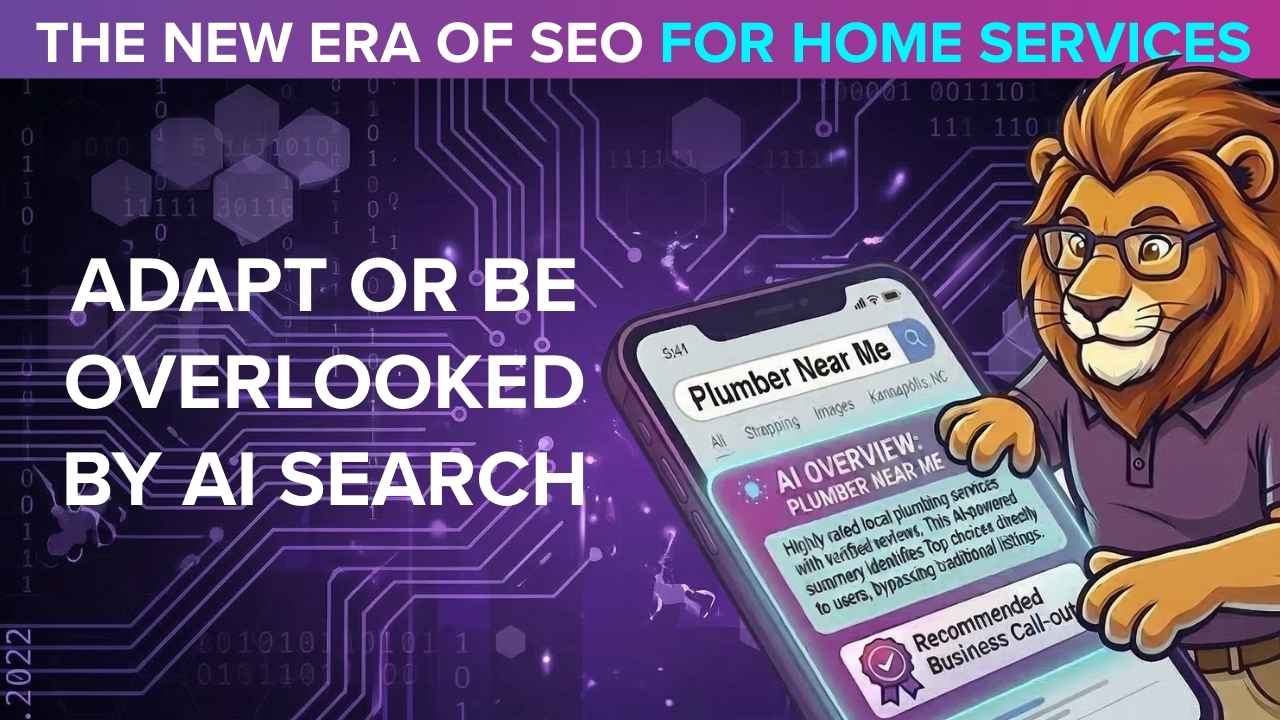
Is Google’s AI Overview Stealing Your Leads? The New SEO Rules for Home Service Contractors
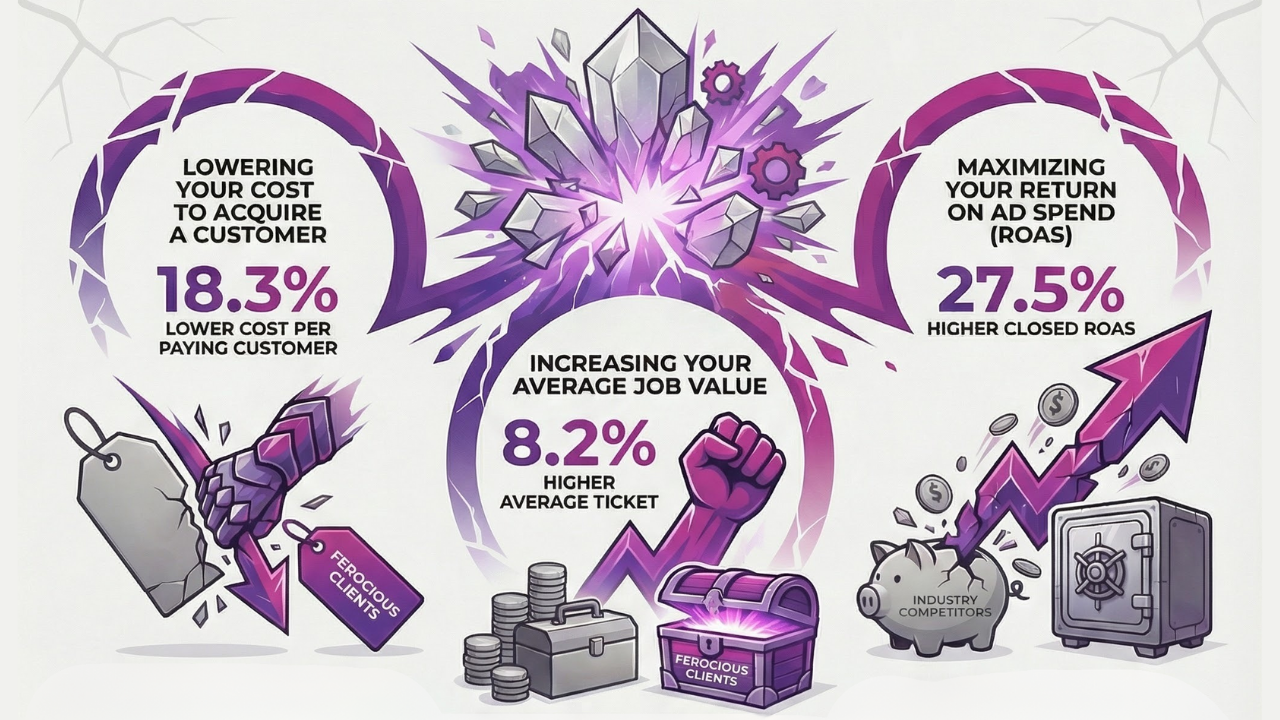
Unleashing Ferocious Results: Our Q4 2025 Advertising Performance
Does Blogging Still Matter for SEO in the Age of AI?
GBP Radius Tightening: Why “Near Me” is Volatile Going Into 2026
The Real Way to Measure Home Services SEO Success (Beyond Rankings)

Seasonal Strategy: Winter HVAC + Holiday Slowdowns

Ready for success?
Take the first step toward accelerating your business growth today!