800-454-9103


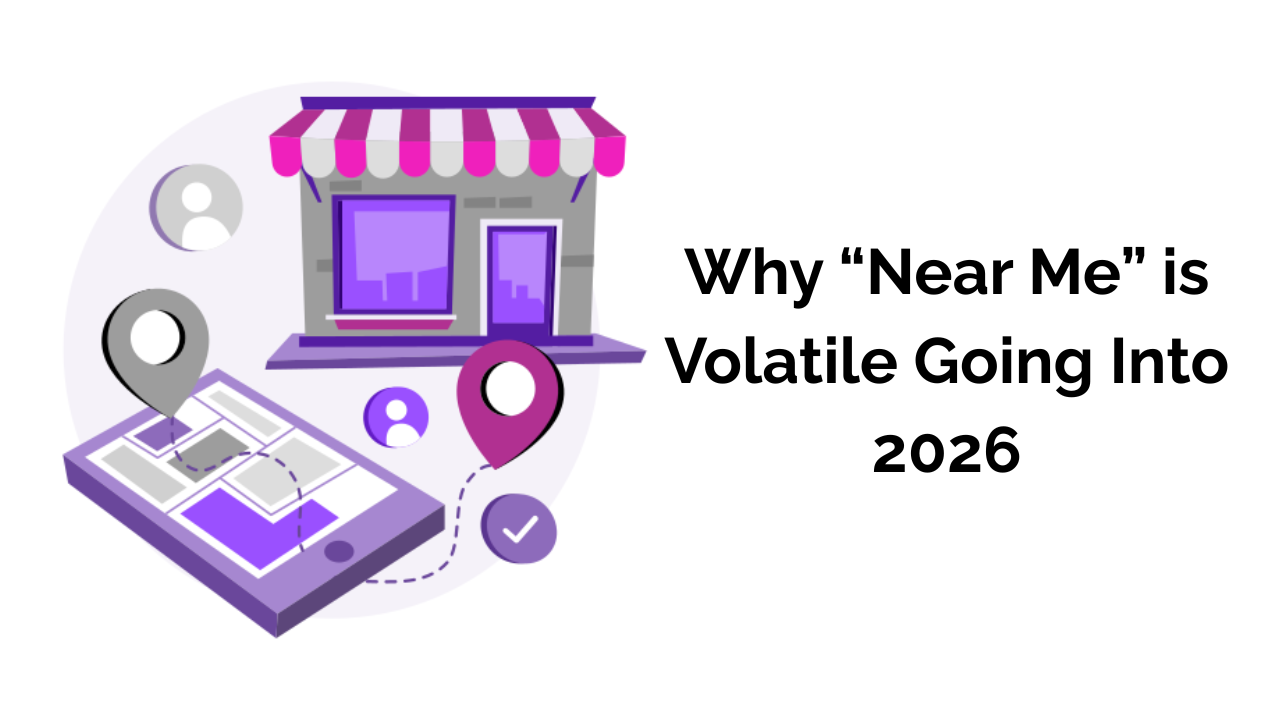
GBP Radius Tightening: Why “Near Me” is Volatile Going Into 2026
Local search has continued to evolve rapidly, and heading into 2026, one of the most impactful shifts for home service businesses is Google’s ongoing tightening of the visibility radius for Google Business Profiles. HVAC, plumbing, and electrical companies are still seeing volatility in “near me” rankings, shrinking coverage areas, and fluctuating map pack performance. These patterns are not temporary anomalies. They are part of Google’s multi-year movement toward hyperlocal precision, where proximity is more dominant than ever.
For home service businesses, this means ranking across large service areas remains increasingly difficult. Companies that once ranked across entire cities now appear only in small micro-zones surrounding their physical location. Even neighborhoods separated by just a few blocks can show dramatically different results.
As we move into 2026, understanding the continuing radius tightening trend and what to do about it is essential. Businesses that adapt now will maintain visibility and local dominance. Those that do not may fall even further behind.
In this guide, Ferocious Media explains why “near me” volatility is continuing into 2026 and what your business must do to stay competitive in this hyperlocal era.
What Is GBP Radius Tightening and Why Is It Happening?
GBP radius tightening refers to Google reducing how far a business can appear in local search results, especially for map pack and “near me” queries. Instead of showing listings across an entire city, Google now prioritizes results that are physically closest to the searcher. This creates much smaller visibility zones for most home service providers.
Google is making this change to increase accuracy and trust in local search. The algorithm now relies more heavily on real-time location data, user proximity, and micro-mapping signals. As a result, businesses that once ranked across a wide area may only show up in nearby neighborhoods, even if they serve a much larger region.
These shifts are intentional and part of Google’s move toward hyperlocal search experiences that reflect the user’s exact location.
Why “Near Me” Searches Will Be Even More Volatile in 2026
The volatility of “Near me” results seen in 2025 is expected to become even more pronounced in 2026. “Near me” rankings will continue shifting from block to block due to Google’s ongoing reliance on real-time proximity.
Several forces are amplifying this instability:
- Google weighs exact user location more than traditional ranking signals.
- The map pack now rotates listings more frequently to test relevance.
- Smaller radius boundaries reduce consistency across nearby neighborhoods.
As a result, “near me” rankings in 2026 will be less stable than ever. Home service businesses must expect constant fluctuation and plan for localized, neighborhood-specific visibility strategies.
How Radius Tightening Impacts Home Service Businesses
Radius tightening affects home service companies in ways that directly influence call volume, lead quality, and overall visibility. Since most HVAC, plumbing, and electrical businesses rely on ranking across wide service areas, smaller radius boundaries make it harder to appear in the neighborhoods that once drove consistent traffic.
Home service businesses are experiencing several clear impacts:
- Visibility drops outside the immediate neighborhood. Many companies now show up in only a fraction of the areas they previously covered. Even if a business serves an entire city, it may only rank within a small zone surrounding its physical address.
- Competition increases inside compressed geographic zones. With radius boundaries shrinking, multiple businesses compete for the same limited visibility. This makes it harder to stand out without stronger reviews, better optimization, and more consistent GBP activity.
- Local pack rankings change more frequently. Google rotates businesses in and out of the map results more often, especially when proximity signals shift. A company that appeared in the top three yesterday may not appear at all today, leading to unpredictable lead flow.
- Service areas no longer align with ranking areas. A business may serve 20 miles in every direction, but Google may only show the listing within a few miles. This disconnect requires additional digital strategies to reach customers outside the radius.
- Searching for your own business with “near me” may give inconsistent results. Businesses with a single location are most affected. Without multiple locations reinforcing their geographic footprint, Google may interpret their relevance as hyper-limited, causing visibility to drop sharply just a few miles from the physical address. This makes single-location businesses more dependent on strong proximity signals, robust landing pages, and consistent local engagement to maintain coverage.
These changes make it essential for home service businesses to rethink how they approach local SEO, visibility, and neighborhood-level competition.
“Google’s tightening how far businesses can show up in local search, and home service companies are feeling it. ‘Near me’ results are getting more unpredictable, coverage areas are shrinking, and proximity matters more than ever. Going into 2026, the companies that win will be the ones that lean into hyperlocal SEO, build strong location authority, and use paid channels to fill the gaps. Adapt now, and you’ll stay visible where it counts.” -Jay Mcleod, Vice President of SEO, Ferocious Media
The Role of Proximity, Prominence, and Relevance in 2026
Google still uses proximity, prominence, and relevance as the core pillars of local ranking, but radius tightening has changed how each factor influences results.
Proximity is now the most dominant signal. Google favors businesses that are physically closest to the user, even if other listings have stronger optimization. This is the main reason map pack visibility changes from one block to another.
Prominence carries more weight when multiple businesses are equally close. Strong review volume, consistent ratings, high-quality photos, and active posting help a listing stand out within a narrow service radius.
Relevance ensures that the business matches the intent of the search. Updated categories, accurate services, and well-built landing pages help Google understand where your business fits in the local landscape.
When combined, these factors determine whether a home service company appears in a very tight map pack or misses out entirely. Because proximity is now so heavily weighted, businesses must strengthen the signals they can control in order to offset shrinking coverage zones.
Why Paid Search and LSAs Matter More Under Radius Tightening
As Google tightens map pack visibility, organic reach alone is no longer enough for many home service companies. With smaller geographic coverage and more volatility in “near me” searches, paid channels have become essential for filling the gaps.
Paid Search and Local Services Ads offer advantages that organic map results cannot guarantee:
- Consistent visibility across your full service area. LSAs and PPC ads are not limited by the radius restrictions that impact GBP rankings. If you serve 20 miles, you can still advertise 20 miles.
- Stability when map pack rankings fluctuate. Even if your GBP listing drops out of the top three, paid placements keep your business in front of local customers.
- Greater control over targeting and budget. Businesses can choose which zip codes, neighborhoods, and service categories to prioritize, which is important when organic radius boundaries become unpredictable.
- Stronger conversion potential during urgent searches. Homeowners with heating or plumbing emergencies often click the top visible option. Paid placements ensure your business gets those top positions more reliably.
- Coverage for areas far from your physical address. Single-location companies benefit most because paid channels allow them to reach high-value neighborhoods where GBP visibility has narrowed.
Paid visibility is no longer optional. It is a required part of a balanced strategy when Google limits organic reach, especially for HVAC and home service providers that depend on covering large geographic areas. Home service businesses that rely solely on organic visibility will struggle in 2026. Those that pair a strong GBP strategy with PPC and LSAs will maintain full-coverage visibility.
How Home Service Companies Should Adapt for 2026
To compete in 2026’s hyperlocal environment, home service companies need a more intentional local SEO strategy. The goal is to strengthen hyperlocal signals, improve relevance, and create more entry points for customers across your entire service area.
- Hyperlocal landing pages and neighborhood-focused content: Creating pages for specific towns, neighborhoods, or service zones helps Google understand exactly where your business should rank. These pages support long tail searches and give you coverage outside your GBP radius.
- Creating one landing page per city to avoid dilution: Local landing pages should be location-driven rather than keyword-driven. Publishing multiple pages for the same city splits authority and can weaken ranking signals, so each city should have a single, dedicated page that consolidates relevance.
- Increasing review velocity and location relevance: Fresh reviews with clear location references help reinforce local authority. Encouraging customers to mention their neighborhood or service area improves Google’s understanding of where you operate.
- Strengthening service pages with proximity indicators: Updating core service pages with phrases like “serving homeowners in [city] and surrounding areas” helps build relevance. Adding updated service areas, schema, and location signals supports broader ranking potential.
- Updating photos, categories, and attributes: Keeping your GBP current is essential in a hyperlocal environment. New photos, accurate categories, and validated attributes increase the likelihood that Google sees your listing as the best match for nearby users.
- Expanding location authority with off-site signals: Local backlinks, community involvement, and strong directory presence boost prominence. These signals help offset the impact of reduced radius boundaries.
By reinforcing your local relevance and building content for multiple areas, you can regain visibility even as Google shrinks the map pack radius.
Why Location Authority Matters More Than Radius in 2026
As Google tightens radius boundaries, location authority has become one of the strongest ways to maintain visibility. Radius determines how far you can appear, but authority influences whether you appear at all within that smaller area.
Location authority grows when Google sees your business as a trusted, established presence in the community. Strong authority can help you outrank competitors that are physically closer to the searcher, especially in dense markets.
Key contributors to location authority include:
- A steady flow of high-quality reviews
- Strong engagement on your GBP profile
- Local backlinks and directory consistency
- Accurate GBP information, such as categories, services, and structured data
- Frequent updates through posts, photos, and attributes
When these signals are strong, Google is more likely to show your business in a tight radius, even when proximity alone is not enough. Home service companies that invest in building this authority gain the stability needed to navigate constant ranking shifts in 2026.
Staying Competitive During GBP Radius Tightening
GBP radius tightening has changed how home service businesses show up in local search, and the impact is significant. Smaller visibility zones, more frequent ranking shifts, and stricter proximity rules mean that “near me” results are no longer predictable. Success in 2026 requires a strategy built around hyperlocal signals, stronger authority, and a balanced mix of organic and paid visibility.
Businesses that adapt early will gain an edge as competitors struggle with shrinking coverage. With the right updates to content, reviews, and paid targeting, you can maintain strong visibility and continue reaching customers across your full service area.
If you want a customized plan to improve your local visibility under the new radius rules, Ferocious Media is ready to help. Our team specializes in home service SEO and can build the strategy you need to stay competitive in 2026. Contact us today to get started.
FAQ
How often does Google adjust radius boundaries for local search?
Google updates radius boundaries throughout the year as part of ongoing algorithm refinements. These changes are not announced publicly, but businesses often notice shifts in visibility when Google adjusts proximity weighting or map pack testing.
Can adding more service areas to a GBP help expand the radius?
No. Service areas listed in your profile do not influence how far you rank. They serve only as user-facing information. Google relies on physical location and proximity signals, so additional service areas do not increase your map pack reach.
Does opening multiple locations help widen search visibility?
Yes. Each physical location creates its own proximity point in the map pack. Multi-location home service companies tend to experience less impact from radius tightening because each office anchors a separate ranking zone.
Should businesses change their content strategy due to radius tightening?
Yes. Hyperlocal content is now essential. Creating neighborhood pages, updating service descriptions, and adding localized elements help expand relevance beyond your primary radius.
How long does it take to improve visibility after optimizing GBP signals?
Most businesses see movement within four to eight weeks, depending on competition and review velocity. Consistent updates, local engagement, and strong service pages accelerate results and help stabilize rankings over time.
Recent News
A Ferocious Approach to Fixing Your GBP and Winning More Contractor Leads
The Apple Business Revolution: What Plumbers and HVAC Pros Need to Know for April 14th
Is Google’s AI Overview Stealing Your Leads? The New SEO Rules for Home Service Contractors
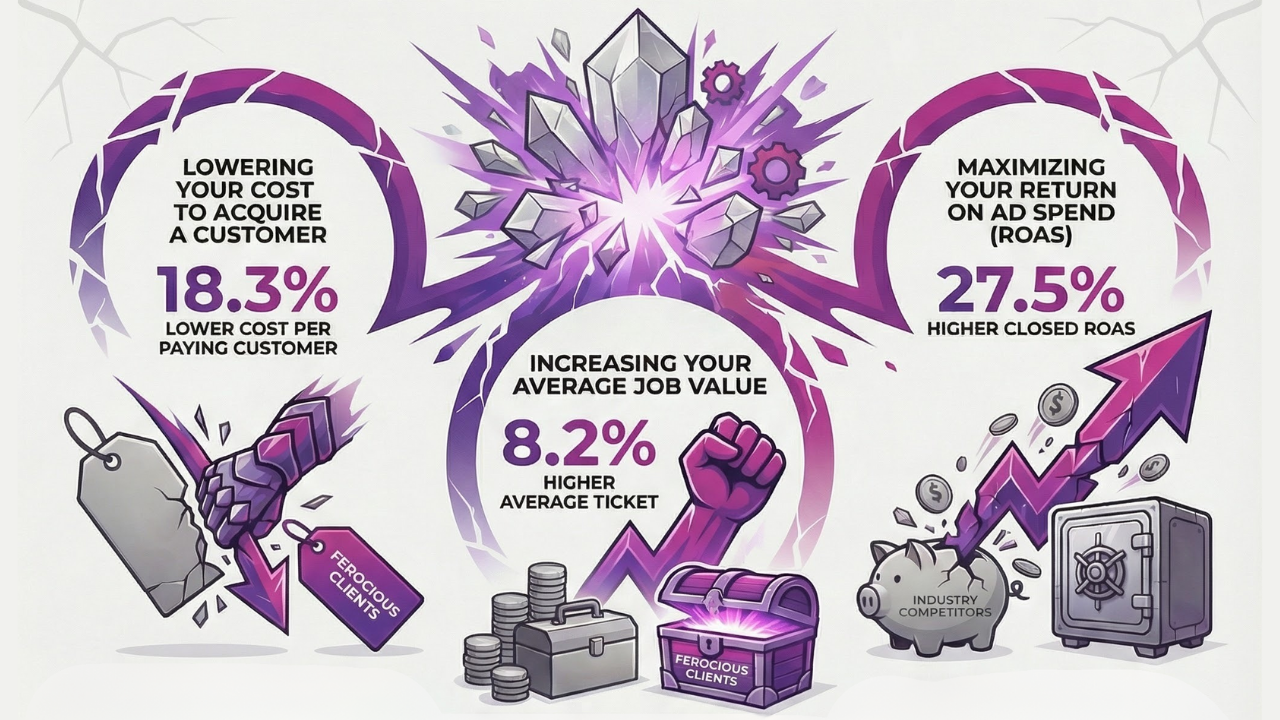
Unleashing Ferocious Results: Our Q4 2025 Advertising Performance

Twenty Years of Ferocious Media: A Founder Q&A on Staying Relevant, Efficient, and Accountable
Does Blogging Still Matter for SEO in the Age of AI?
The Real Way to Measure Home Services SEO Success (Beyond Rankings)

Ready for success?
Take the first step toward accelerating your business growth today!